Somewhere along the way, we started treating clothes like takeaway coffee. Buy it, use it for a bit, toss it, repeat. The fashion industry is delighted by this arrangement. A fresh collection every few weeks, prices low enough that throwing things out barely registers, and a gentle background hum reminding you that whatever you bought last season is already a little embarrassing.
Slow fashion is the quiet rebellion against all of that. And underwear, of all things, is a surprisingly good place to start.
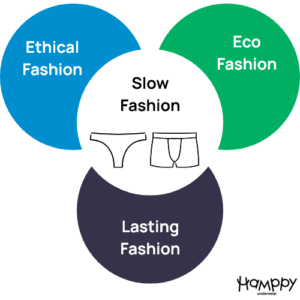
At its simplest, slow fashion is the antidote to the fast-fashion treadmill, the one built on endless new drops, cheap materials, and even cheaper labour. The idea is almost embarrassingly reasonable: choose well-made things, keep them for years, and buy new far less often.
The term goes back to designer Kate Fletcher in 2008, who borrowed it from the Slow Food and Slow Living movements, the same instinct that asks you to pay a little attention to what you eat and how you live. Slow fashion brings that thinking to your wardrobe. And it draws a useful line that “sustainable” and “organic” tend to miss: those words mostly describe how something is made. Slow fashion cares about that too, but also about how it’s bought. Less impulsively. More on purpose.
It’s still a young movement, and next to the fast-fashion giants, a small one. But it’s growing, one considered purchase at a time. The steps add up.
Slow fashion is elegant, timeless, and stylish
A handful of things set slow fashion apart:
- Quality that outlasts the season. Clothes made to survive years of real life, not three washes.
- A change of mind, not just of wardrobe. Consume more consciously, treat resources like they’re finite (they are).
- Honest sustainability. Cleaner production, fewer nasty chemicals, less waste for waste’s sake.
- Fairness. The people making your clothes come first: fair pay, safe conditions, no child labour. Non-negotiable.
- A return to normal, actually. Fast fashion is the new invention here. For most of history, owning fewer and better clothes was simply how it worked. Slow fashion just remembers that.
- It’s quietly cheaper. Buying better and buying less tends to beat restocking cheap pieces on loop.
There’s a style payoff too. Slow fashion ages well because it isn’t chasing anything. Instead of a wardrobe dictated by this month’s hype, you end up with one that looks like you, and still looks good three years from now.


Where hemp comes in
All of this is wonderful in theory. In practice, slow fashion lives or dies on one unglamorous detail: the thing has to be genuinely good. Good enough that you want to keep it for years, not just feel noble about owning it.
Which is exactly why we make underwear from hemp. It’s one of the strongest natural fibres going, it holds its shape and colour long after cheaper pairs have surrendered at the waistband, and (for the record) it is not the scratchy hippie sack its reputation suggests. It’s soft, breathable, and somehow better with every wash. Reliable enough to earn its place in a slow wardrobe, comfortable enough that you’ll forget the politics entirely and just enjoy wearing it.
That “buy less, keep it longer” logic also explains a couple of things we do that other brands find baffling. We don’t run sales, for instance. No Black Friday, no seasonal panic, no countdown timers. (There’s a whole story in why we’ll never do one, and it’s worth its own post.) And because slow fashion is about people as much as fabric, we make ours with a manufacturer we actually know and have visited in person, not a faceless factory floor. (Where exactly a Hamppy is made is a story we’ll tell properly soon.)
Slow fashion was never about owning less to prove something. It’s about owning things that are actually good: comfortable enough to forget, reliable enough to keep, and made by people who were treated decently along the way.
You can start almost anywhere. We’d suggest the drawer nobody thinks about, and a few pairs that quietly outlast everything else in it.