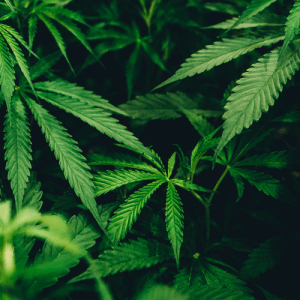
You’re probably thinking: “Wait. You make underwear out of weed. Really?” Not quite. Hemp and marijuana are both cannabis, but they are very different plants. Unlike marijuana, hemp contains almost no THC, the part that gets you high, which is why it’s perfectly legal to grow on an industrial scale. You could wear it head to toe and the only thing you’d feel is comfortable. We’ve checked.
For a plant with such a long list of genuinely useful talents, hemp is still weirdly underused, mostly because of the company it keeps in people’s heads. Which is a shame, because it’s one of the most versatile and sustainable crops on the planet. It’s also close to the perfect material for clothing, underwear especially. Here’s the case.
Why hemp makes such good underwear
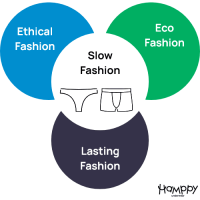
Hemp has the strongest natural fibre in the world. Fabric made from it is around three times stronger than cotton, so it’s remarkably reliable. Your Hamppy outlasts the rest of your underwear by a comfortable margin. That matters more than it sounds, because the fashion industry is one of the most polluting on earth. Underwear you replace less often is underwear that does less harm.
It’s also naturally antibacterial. This does not, sadly, mean you can stop doing laundry. It means bacteria grow far more slowly on hemp than on cotton or bamboo, so your Hamppy stays fresh for longer and resists the smells that quietly move into ordinary fabric. Hemp is hypoallergenic too, which your sensitive skin will thank you for without saying a word.
So it’s strong and hygienic. What about comfort, because nobody is here for itchy underwear. The good news is that hemp gets softer every single time you wash it. It breathes well, soaks up moisture quickly and dries fast. Desk or gym, a Hamppy stays comfortable all day. It’s the rare thing that actually improves with age, which is more than most of us can say.

The case gets stronger once you look past the fabric and into the ground it grows in.
Hemp is unusually kind to soil. It takes very few nutrients from the earth. As it grows its leaves drop and feed the soil for the next crop, so the land never burns out. It’s so good at this that hemp is planted to clean contaminated land, drawing toxins, chemicals and pollutants up and out of the ground. Its long roots reach deep, holding the soil together and fighting erosion. It is, essentially, a plant that tidies up after itself.
It also needs less room. Hemp produces two to three times more fibre per hectare than cotton, so the same amount of material takes far less land and fells far fewer trees. On top of that it’s carbon negative: while it grows it absorbs more carbon than the machinery used to harvest, process and transport it gives off. Scientists estimate every tonne of hemp pulls about 1.63 tonnes of CO2 out of the air, every four months, considerably more than trees manage in the same window.
And what about water? The clothing industry drinks staggering amounts of it. The Aral Sea, once the fourth-largest lake in the world, sitting between Kazakhstan and Uzbekistan, has shrunk to a quarter of its size, largely because the cotton industry drained the rivers feeding it. An entire sea, gone, so we could all have slightly cheaper t-shirts. Hemp needs far less, by most estimates only a fraction of the water cotton drinks for the same fabric.
Then there are pesticides, cotton’s other bad habit and one of the heaviest chemical loads of any crop. Hemp skips them entirely. It’s tough, growing so fast, ready in around 60 days against cotton’s 160, that pests and weeds never get a turn. No chemical bouncer required. The plant handles the door itself.
Why hemp is good for the planet
Here’s the part that tips into the absurd. Almost none of the plant goes to waste. The outer stem becomes rope. The woody core becomes paper, building materials and animal bedding. The seeds are full of protein and end up in soap, shampoo, lotion and cosmetics. The oil goes into paint, adhesives and plastic. The leaves can be eaten or juiced. At a certain point you stop asking what hemp can make and start asking what it can’t.
So no, you cannot smoke your Hamppy. Please stop trying. But the plant it’s made from is, by a wide margin, the most versatile and sustainable material we could have picked. Which is exactly why we picked it.